
News
Nigerians Yet to Feel Gains of Tinubu’s Economic Reforms – Atiku

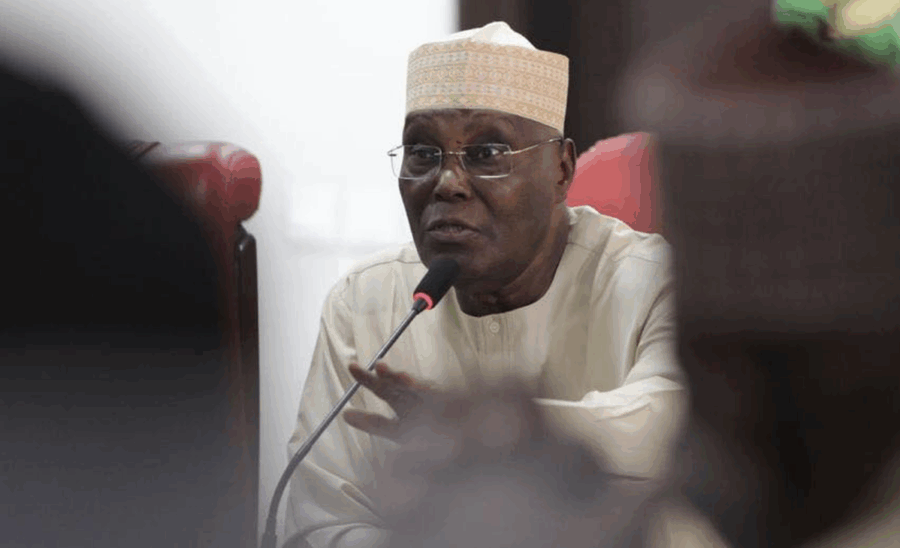
Former Vice-President and African Democratic Congress (ADC) presidential candidate, Atiku Abubakar, has said Nigerians are yet to feel the benefits of President Bola Tinubu’s economic reforms, amid rising living costs and growing public debt.
Atiku made the assertion in a statement issued by Phrank Shaibu, Director of Strategic Communications of the ADC Presidential Campaign Council.
He questioned why the Federal Government continued to borrow despite the removal of the petrol subsidy and increased government revenues, arguing that Nigerians were still facing higher costs of food, transportation, energy, housing and other basic necessities.
“A government that says more money is coming in must explain why it keeps borrowing and why the people paying for its policies cannot see the promised gains,” Atiku said.
The former vice-president cited figures from the Debt Management Office (DMO), which showed that Nigeria’s public debt rose from N49.85 trillion in March 2023 to N166.79 trillion as of June 30, 2026.
Atiku called on the Tinubu administration to provide Nigerians with a detailed account of the country’s debt, including previously existing obligations, the impact of exchange-rate movements on foreign-denominated debt, new loans contracted since 2023, repayments and outstanding liabilities.
“I expect President Tinubu to put the full account before Nigerians,” he said.
Atiku questions economic recovery
Atiku also questioned whether improvements in government revenue, foreign reserves and other macroeconomic indicators had translated into better living conditions for ordinary Nigerians.
“The true test of economic policy is whether Nigerians can afford food, transportation, housing, education, healthcare and electricity,” he said.
He also referenced a June 2026 assessment by the International Monetary Fund (IMF), which acknowledged improvements in Nigeria’s macroeconomic indicators while noting that conditions remained difficult for many Nigerians.
Atiku further cited rising petrol and diesel prices, arguing that increased energy costs had placed additional pressure on household budgets.
“Nigerians were promised that today’s pain would produce tomorrow’s gain. After more than three years, they are entitled to ask: gain for whom?” he said.
Atiku raises concern over debt servicing
The former vice-president also raised concerns about the proportion of government revenue being committed to debt servicing.
He cited BudgIT figures showing that debt service reached N12.52 trillion in the third quarter of 2025, compared with revenue of N18.63 trillion during the period.
“Money committed to debt service is money unavailable for competing public needs,” Atiku said.
He also referred to the 2026 fiscal framework, which projects expenditure of about N68.32 trillion against expected revenue of N36.87 trillion, leaving a projected deficit of approximately N31.45 trillion.
Atiku further cited President Tinubu’s remarks at the Africa Forward Summit in Nairobi in May, where the president reportedly put Nigeria’s 2026 debt-service obligations at about $11.6 billion.
He argued that continued borrowing, rising debt-service obligations and persistent budget deficits could place further pressure on public finances.
Atiku urged the Federal Government to provide greater transparency on its borrowing and debt-servicing activities, while insisting that the ultimate measure of economic reforms should be their impact on the living conditions of Nigerians.