
News
Atiku’s Subsidy Plan Could Return Nigeria to Fuel Queues, Threaten Minimum Wage – APC Chairman

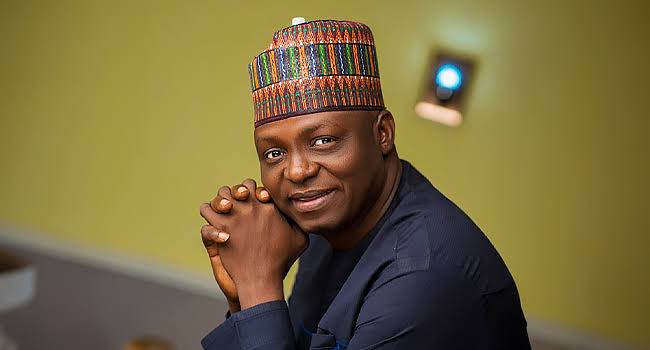
The National Chairman of the All Progressives Congress (APC), Nentawe Yilwatda, has warned that former Vice-President Atiku Abubakar’s proposal to restore petrol subsidy could plunge Nigeria back into an era of fuel scarcity and undermine the government’s ability to sustain the current minimum wage.
Yilwatda spoke in Abuja while receiving a delegation of economic stakeholders who visited him to discuss the state of the Nigerian economy, ongoing reforms and measures to achieve sustainable economic growth.
Atiku, the presidential candidate of the African Democratic Congress (ADC), recently said he would restore petrol subsidy if elected president in 2027.
He also questioned the Federal Government’s management of funds saved from the removal of subsidy, arguing that the resources should have been used to reduce poverty and finance development.
President Bola Tinubu announced the removal of petrol subsidy on May 29, 2023, shortly after assuming office. The policy led to a significant increase in petrol prices, with its effects felt across transportation and the wider cost of living.
‘Who Pays for Subsidy?’
Yilwatda urged Nigerians to look beyond the immediate reduction in petrol prices that subsidy could provide and consider its broader implications for government revenue and expenditure.
“Subsidy may appear attractive because it promises cheaper petrol, but Nigerians must also ask the bigger question: who pays for the subsidy and what happens to the resources that government must divert to finance it?” he said.
According to him, the impact of any subsidy policy should be assessed beyond its effect at the filling station, particularly its implications for salaries, pensions, education, healthcare, infrastructure and other government responsibilities.
The APC chairman said the removal of subsidy had resulted in increased federal allocations to states, improving the finances of several state governments.
He noted that some states previously struggled to pay salaries and pensions, with some resorting to partial payments.
Yilwatda therefore argued that any proposal to restore petrol subsidy must undergo thorough economic scrutiny to prevent Nigeria from returning to its previous fiscal challenges.
He also linked the subsidy debate to the implementation of the new minimum wage, stressing that governments need stronger and more sustainable revenues to meet higher wage obligations while continuing to fund essential services.
“The challenge is not merely to announce higher wages but to create an economic environment in which governments can consistently pay them without sacrificing investment in infrastructure, education, healthcare and other essential services,” he said.
Yilwatda further expressed concern that restoring subsidy could affect funding for education and other critical sectors.
He recalled the prolonged disruption of academic activities in Nigerian universities under the previous administration, warning that policies that weaken government revenue could have wider consequences for Nigerians.
“A return to a fiscally unsustainable subsidy regime could have consequences far beyond the price of petrol. When government revenue is squeezed, the first victims are often the critical sectors that directly affect the welfare and future of our people,” he said.