
News
Senator Mustapha’s Agro Bills Move Closer to Passage as Senate Receives Report

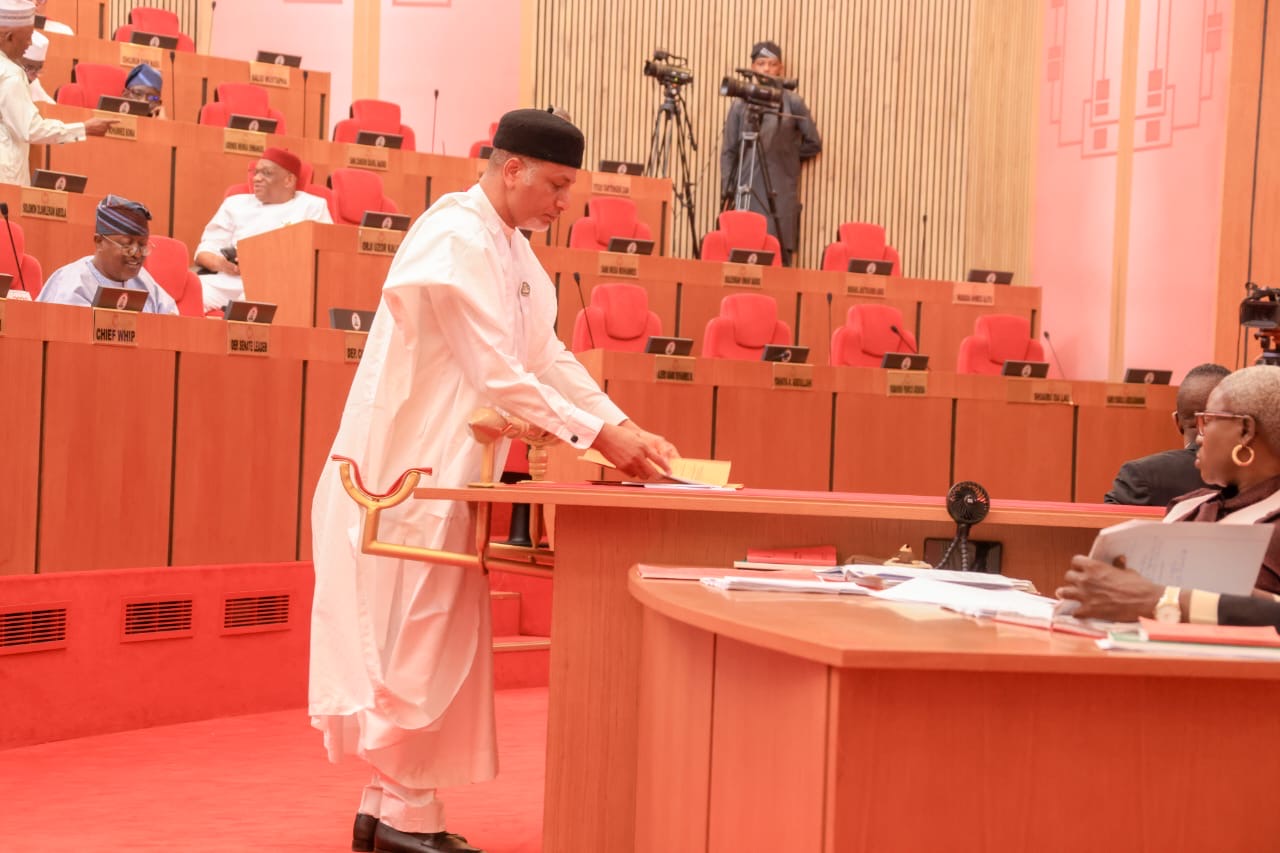
The Senate on Tuesday took a major step toward strengthening Nigeria’s food system, receiving committee reports on three key bills designed to boost local production and reduce the country’s heavy reliance on imports.
Presenting the reports at the floor of the hallow chamber during plenary, Senator Saliu Mustapha, who represents Kwara Central and chairs the Senate Committee on Agricultural Production Services and Rural Development, outlined the far-reaching impact of the proposed legislation.
The bills under consideration include the National Food Reserve Agency Bill and the Mandatory Cassava Inclusion in Flour Production Bill, both sponsored by Mustapha as well as the National Rice Council Board Bill sponsored by Senator Adamu Aliero representing Kebbi Central in the National Assembly.
Mustapha described the Bills as critical interventions that align with President Bola Ahmed Tinubu’s Renewed Hope agenda in ensuring food security for the Nation as well as Job Creation in the agricultural sector while strengthening the agricultural value chain
Explaining the intent of each Bill, the lawmaker noted that the Food Reserve Agency Bill seeks to establish a national system for storing grains and stabilizing market prices.
The Cassava Inclusion Bill, he said, will mandate a minimum of 20 percent cassava content in flour production, a move aimed at cutting down Nigeria’s dependence on imported wheat.
On the rice sector, Mustapha emphasized on the urgency of reform, pointing out that Nigeria spends an estimated $2 billion annually on rice imports.
The proposed National Rice Council Board Bill, he said, is designed to reverse that trend by coordinating production, processing, and distribution across the country.
“The goal is to build a full agricultural value chain, from farm to reserve, to processing,” Mustapha said.
He however stressed that the measures would enhance economic stability and promote self-sufficiency.
The Senate unanimously passed the Bills, which will now proceed to the House of Representatives for concurrence before being transmitted to the President for assent.