News
Nigeria Reduces Dependence On Oil Revenue – Tinubu Says

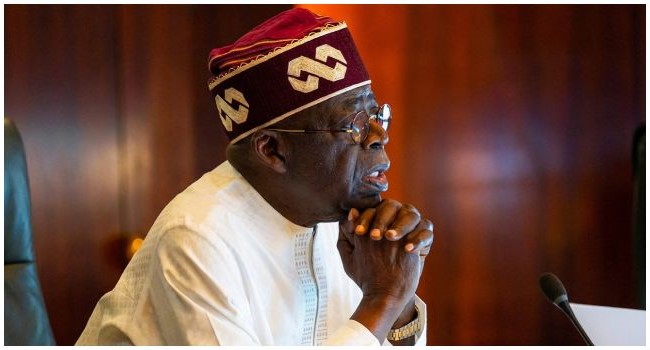
President Bola Tinubu has said Nigeria is gradually moving away from relying mainly on crude oil revenue as his administration pushes for a broader and more diverse economy.
Tinubu made this known on Tuesday in Abuja during the fifth anniversary of the Nigerian Upstream Petroleum Regulatory Commission, NUPRC. He was represented at the event by Vice President Kashim Shettima.
The President said the government would continue working to reduce the country’s dependence on oil while ensuring that the petroleum industry continues to provide energy, foreign exchange and revenue needed to support the economy.
He said Nigeria’s diversification plans under the Renewed Hope Agenda were focused on developing sectors such as agriculture, manufacturing, digital businesses and the creative industry.
According to him, the government also plans to place gas at the centre of Nigeria’s energy strategy because of the country’s large gas reserves.
Tinubu said the government would increase the supply of gas for electricity generation, industrial activities and clean cooking while also taking steps to reduce gas flaring and methane emissions.
He added that Nigeria would continue developing renewable energy while meeting its climate obligations without slowing down economic growth or limiting access to energy.
The President said the oil and gas sector could also provide more opportunities for Nigerian engineers, fabricators and local service companies if properly managed.
He credited the government, security agencies, oil companies, host communities and the NUPRC with helping to make crude oil production more stable.
Tinubu also said investors who had previously moved their businesses away from Nigeria were beginning to return, adding that the country had ranked first among Africa’s leading destinations for upstream investment for two consecutive years.
He attributed part of the progress to the Petroleum Industry Act, which provided a new framework for reforms in the petroleum sector.
However, the President said the government had listened to concerns from investors over high operating costs, slow contracting processes and uncertainty surrounding the fiscal terms for complex oil projects.
He said the government would continue to improve the business environment and make Nigeria more attractive to investors in the petroleum industry.
Tinubu said the country would pursue its ambition of becoming a preferred destination for hydrocarbon investment while demanding greater accountability from operators and regulators.
He said companies benefiting from government incentives would be expected to meet their work programme commitments, support local content, protect the environment and maintain good relations with host communities.
The President also tasked the NUPRC with ensuring that its regulatory procedures remained clear and predictable. He urged the commission to work closely with other government agencies to prevent investors from facing conflicting requirements.
Tinubu described the NUPRC as an important link between government policy and investment in the upstream petroleum industry. He urged the commission to maintain independence, fairness and professionalism as it enters its next five years.
The Minister of State for Petroleum Resources, Oil, Heineken Lokpobiri, said the NUPRC had recorded several achievements since its establishment five years ago.
Lokpobiri said Nigeria still needed more investment, additional licensing rounds and increased exploration to fully develop its petroleum resources.
He noted that the country currently produces about 1.7 million barrels of crude oil per day and has more than 37 billion barrels of reserves.
The minister urged the NUPRC to take firm regulatory decisions and remove bureaucratic delays that could discourage investors from putting money into Nigeria’s oil and gas sector.
The Chairman of the NUPRC Governing Board, Magnus Abe, said the establishment of the commission under the Petroleum Industry Act was part of the country’s efforts to reform the oil and gas industry.
Abe attributed the commission’s progress to the support of the Tinubu administration and its decision to allow the regulator to operate without political interference.
He also commended NUPRC workers for their dedication to improving transparency, professionalism and efficiency within the organisation.
The Chairman of the Senate Committee on Gas, Jarigbe Agom Jarigbe, said the reforms introduced through the Petroleum Industry Act had improved transparency and created more certainty for investors.
Jarigbe said the National Assembly was pleased with the commission’s performance and its role in improving operations within the petroleum industry.