
News
IMF Warns Nigeria Against Petrol Subsidy Return

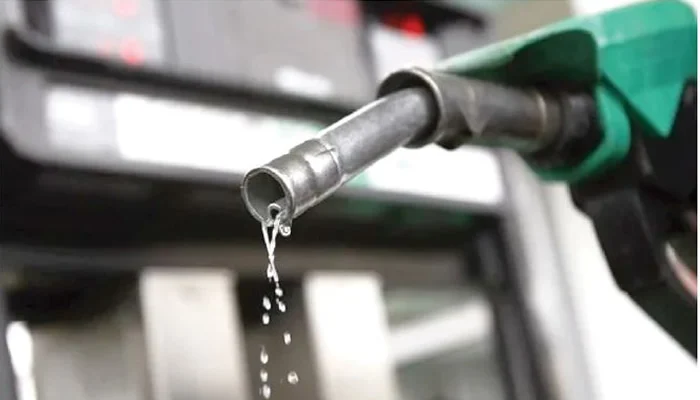
The International Monetary Fund has advised the Nigerian government against bringing back a general petrol subsidy, recommending that available funds should instead be used to support low-income earners and other vulnerable citizens affected by rising fuel prices.
The IMF said a blanket subsidy would place additional pressure on the country’s finances, adding that targeted assistance would be a better way to reduce the burden of higher energy costs on Nigerians.
The Director of the IMF’s Fiscal Affairs Department, Rodrigo Valdés, gave the advice on Wednesday while responding to questions about calls for the restoration of petrol subsidies in Nigeria ahead of the forthcoming elections.
He spoke during the ongoing annual meetings of the IMF and the World Bank Group in Bangkok, Thailand.
Valdés acknowledged that rising petrol and diesel prices often create political pressure on governments, especially when the increases affect transportation costs and the prices of essential goods and services.
However, he explained that governments needed to recognise that the increase in energy prices was linked to global market conditions and that keeping fuel prices low for everyone could be expensive.
According to him, the money spent on general fuel subsidies could be put to better use by directing assistance to people who are struggling the most with the rising cost of living.
He maintained that governments should consider providing relief to vulnerable groups instead of using public funds to subsidise fuel consumption for all citizens, regardless of their financial circumstances.
Valdés also suggested that the government could introduce measures to reduce transportation costs without restoring a blanket petrol subsidy.
He explained that authorities could consider supporting public transport services to prevent higher fuel prices from placing excessive pressure on commuters.
The IMF has repeatedly raised concerns about broad fuel subsidies, arguing that they consume large amounts of public funds and often provide greater benefits to wealthier households because they generally use more fuel.
The latest advice comes amid renewed calls for the Nigerian government to reconsider its petrol pricing policy following increases in global energy costs.
In response to the pressure, the Federal Government recently announced a 30-day petrol discount at retail outlets operated by the Nigerian National Petroleum Company Limited.
The temporary measure is expected to provide some relief to consumers, with public transport operators given priority under the arrangement.
The Minister of Finance, Taiwo Oyedele, explained that the NNPC retail outlets would sell petrol at cost by giving up their retail profit margin during the period.
The minister described the arrangement as a temporary relief measure designed to reduce the impact of rising fuel prices rather than a return to the former petrol subsidy system.
The government has also proposed negotiating a ceiling of ₦1,350 per litre for petrol’s ex-gantry or landing cost. The proposed arrangement would be reviewed monthly, depending on prevailing conditions.
Valdés further warned that fuel subsidies could worsen pressure on global energy prices because they prevent consumers from adjusting their demand when supplies become limited.
He explained that when governments artificially reduce fuel prices through subsidies, consumers may continue using fuel at high levels even when supplies are insufficient.
This could increase pressure on the available supply and force prices higher, leaving other consumers and countries to bear a greater share of the adjustment.
The IMF official therefore urged governments to allow demand to respond to market conditions while providing support to people who cannot easily cope with rising energy costs.
Another official in the IMF’s Fiscal Affairs Department, Davide Furceri, also recommended that governments should direct assistance towards vulnerable households and people who depend heavily on public transportation.
Furceri suggested that governments could use funds previously spent on general fuel subsidies to support commuters and other groups most affected by higher fuel prices.
He also recommended interventions such as school feeding programmes, assistance for farmers facing financial difficulties and support targeted at people living in areas where the effects of rising costs are particularly severe.
According to him, such measures could help governments reduce the impact of higher fuel prices without committing excessive public resources to subsidies that benefit the entire population.
Furceri acknowledged that some countries might struggle to identify eligible beneficiaries because they lack reliable household records and digital payment systems.
However, he said governments could adopt alternative methods of reaching vulnerable citizens while working to improve the systems needed to distribute assistance more effectively.
He advised that any support introduced to cushion the effects of rising energy prices should be temporary, limited and directed at those who need it most.