News
FG Plans Assessment Tests for Foreign Graduates Before NYSC


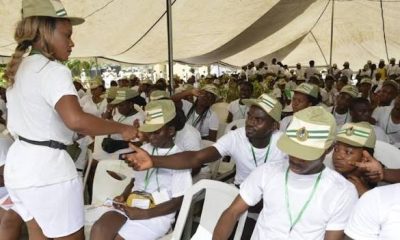
The Federal Government is considering introducing assessment tests for Nigerians who obtain university degrees from foreign institutions before allowing them to participate in the National Youth Service Corps (NYSC) scheme.
The proposed measure is expected to apply particularly to graduates of institutions in African countries, as the government moves to ensure that foreign certificates presented for NYSC mobilisation meet the required academic standards.
The Acting Permanent Secretary of the Federal Ministry of Education, Dr Folake Olatunji-David, disclosed this on Monday during the 37th meeting of the National Standing Committee on Evaluation of Foreign Qualifications held in Abuja.
She explained that the proposed assessment would help determine whether Nigerians who studied abroad genuinely acquired the knowledge and skills represented by their certificates before their qualifications are approved for NYSC mobilisation.
Olatunji-David said the government was concerned about the increasing number of Nigerians attending foreign universities, especially in West African countries. She maintained that the country must ensure that certificates obtained outside Nigeria reflect actual academic achievements.
She noted that although the government supports international education and cooperation, it would not allow unrecognised institutions and questionable qualifications to weaken the country’s educational standards.
The acting permanent secretary also called on committee members to consider making assessment tests part of the process for evaluating foreign degrees presented by Nigerians seeking NYSC mobilisation.
She described the committee as an important body responsible for protecting the credibility of Nigeria’s education system through the recognition of genuine certificates issued by properly accredited foreign institutions.
She further raised concerns over the growing cases of forged degree certificates, both from Nigerian and foreign institutions, adding that the ministry was working towards addressing the problem.
Olatunji-David commended members of the committee for their previous decisions, which she said had helped improve the process of evaluating and recognising foreign academic qualifications.
She listed some of the ministry’s achievements to include verifying the accreditation status of foreign institutions, issuing clearance letters for NYSC mobilisation, authenticating certificates and providing no-objection letters.
The ministry also issues eligibility and proficiency letters to Nigerians travelling abroad for employment opportunities or further education.
According to her, the process of evaluating foreign certificates and authenticating Nigerian academic documents has been automated and digitalised since the beginning of 2026. She said the development had made the process easier while ensuring that payments collected were properly remitted into government accounts.
The committee is also expected to discuss five major issues during the meeting. One of them concerns the guidelines for issuing no-objection letters to individuals seeking to register proposed educational institutions with the Corporate Affairs Commission (CAC).
Another issue involves foreign-curriculum secondary schools operating in Nigeria and their compliance with the country’s education policy on public examinations.
She explained that such schools must prepare their students for recognised examinations conducted by the West African Examinations Council (WAEC), National Examinations Council (NECO), National Business and Technical Examinations Board (NABTEB) or National Board for Arabic and Islamic Studies (NBAIS), depending on the relevant curriculum.
She added that students must sit for at least one of the approved examinations before completing their secondary education, regardless of whether they intend to continue their studies in Nigeria or abroad.
The committee will also examine the recognition of foreign secondary school qualifications, including the Higher School Diploma awarded in the United States and Canada, as well as Baccalaureate certificates issued by French schools.
Other matters for discussion include developing a system for monitoring Nigerians studying in African institutions through official visits and recognising foreign regulatory agencies responsible for providing information about accredited institutions through diplomatic channels.
Earlier, the Director of Education Support Services in the ministry, Mr Gabriel Amudipe, described the committee’s responsibilities as important to improving the quality of education and ensuring proper standards across the country’s education sector.
Amudipe said the ministry remained committed to using reliable information in planning, monitoring educational activities and assessing foreign qualifications.
He urged committee members to remain fair, objective and firm when considering applications, stressing the need to approve genuine academic certificates while taking appropriate action against qualifications that fail to meet the required standards.
He maintained that the committee’s work would continue to support better learning outcomes, improve the performance of educational institutions and strengthen quality assurance across all levels of education.
The meeting forms part of the Federal Government’s ongoing efforts to regulate the recognition of foreign qualifications and ensure that Nigerians presenting certificates obtained abroad meet the country’s academic requirements.