
News
Musk Unveils Tesla’s Flying Car

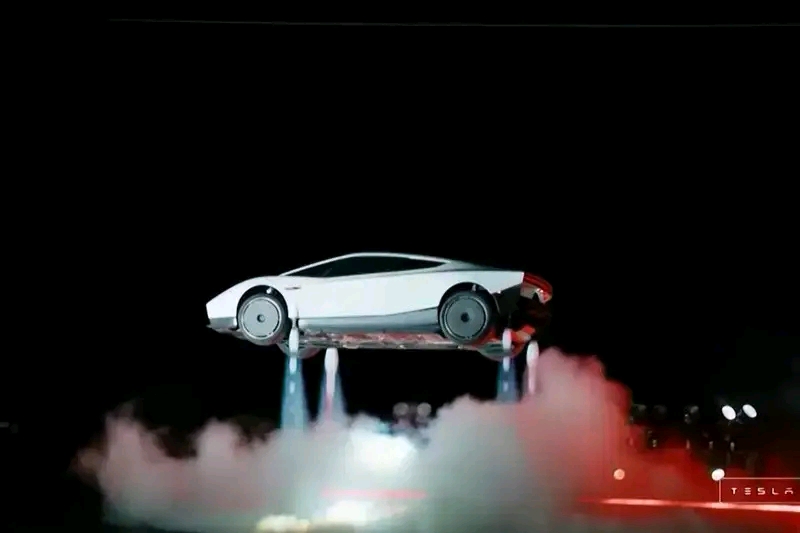
Tesla Chief Executive Officer Elon Musk has unveiled a new sports car featuring technology designed to lift it into the air, raising fresh hopes for the development of flying vehicles.
The vehicle, known as the new Tesla Roadster, was presented during an event held at a SpaceX test facility in Texas on Thursday. The demonstration was streamed live through Tesla’s account on X, allowing viewers to watch the car perform a launch from a steep ramp before landing back on its wheels.
Musk described the development as a major step towards making flying cars a reality. However, he admitted that the project still faces uncertainties, although he expressed confidence that the technology could work.
According to the billionaire businessman, the vehicle uses highly pressurised air tanks to generate the force needed to propel it into the air. The technology is expected to give the Roadster capabilities beyond those of conventional sports cars.
Musk linked the development to the combined expertise of Tesla and SpaceX, the two companies he leads. While Tesla specialises in electric vehicles and related technologies, SpaceX focuses on rocket development and space exploration.
He explained that the project benefited from the cooperation between the two companies, bringing together their experience in automotive engineering and rocket technology to develop a vehicle with unusual capabilities.
Musk also disclosed that the new Roadster is expected to enter production in 2028. However, further details about its commercial availability, price and the full extent of its flying capabilities were not provided during the presentation.
The announcement comes as the flying car industry continues to attract attention from technology companies and manufacturers seeking new ways to change transportation. Despite growing interest, the sector has struggled to achieve widespread commercial success because of technical difficulties, safety concerns and strict aviation regulations.
Developing a vehicle capable of travelling on roads and operating safely in the air presents several challenges. Manufacturers must find ways to balance road performance with the requirements of flight, while also addressing energy consumption, stability, passenger safety and air traffic regulations.
Although electric motors and improvements in battery technology have helped advance the industry in recent years, flying cars remain far from becoming a common means of transportation.
Attempts to develop vehicles that can both drive and fly date back more than a century. American aviation pioneer Glenn Curtiss presented an early flying car prototype in 1917, marking one of the first attempts to combine the features of an automobile and an aircraft.
Since then, engineers and inventors have continued exploring different designs, but many projects have failed to move beyond experimental stages.
Recent advances in electric propulsion, battery performance and automated control systems have renewed interest in the concept. Several developers are now working on vehicles designed to take off and land vertically, potentially allowing people to travel without relying entirely on conventional roads and runways.