
News
Independence Day: Nigeria was like cancer patient on morphine, until we came — Tinubu

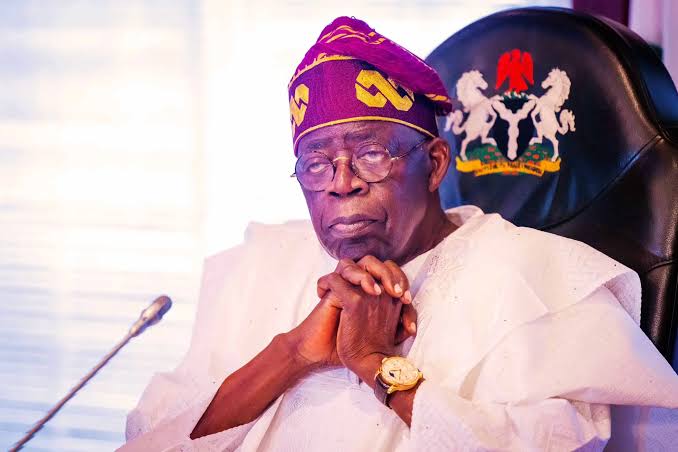
President Bola Ahmed Tinubu has likened Nigeria’s economic condition before his administration to that of a cancer patient being given morphine to suppress pain instead of receiving treatment for the underlying disease.
Tinubu made the comparison in his Independence Day address to Nigerians on Thursday, October 1, 2026, as he defended the economic reforms implemented by his administration since assuming office in 2023.
According to the President, successive governments had for years postponed difficult economic decisions, focusing on the symptoms of the country’s problems while allowing structural weaknesses to deepen.
He said that by 2023, poverty was rising and hope was “nearly gone”, leaving his administration with little choice but to take what he described as decisive action.
“By 2023, poverty was rising, and hope was nearly gone. The country’s situation was darker than ever. We had no choice but to act,” Tinubu said.
Using a cancer patient as an analogy, the President said Nigeria had to choose between undergoing painful treatment with the prospect of recovery and continuing to rely on temporary measures that only masked the underlying problems.
“For too long, Nigeria’s leaders chose morphine while praying for a miracle that never came,” he said.
Tinubu argued that previous administrations had sustained inefficient economic arrangements and avoided difficult decisions, thereby passing the consequences from one generation to another.
He said his administration decided to take a different approach by confronting what he described as the country’s deep-rooted economic problems.
“When this Administration assumed office, we resolved to do things differently. We chose to excise the cancer,” he said.
The President acknowledged that the reforms had been difficult and had produced real hardships for Nigerians, but maintained that the challenges should not be confused with the problems the reforms were intended to address.
“The reforms that followed were difficult. The side effects were real. Yet, we must never confuse the medicine with the disease,” Tinubu said.
He also ruled out a return to the petrol subsidy regime, warning against calls to reverse the reforms.
“Our reforms did not create the weaknesses in our economy. They confronted them,” he said, adding that Nigerians should resist attempts to return to what he described as the “abuse of addictive subsidies.”
Economic outlook
Tinubu said the country’s economic outlook had improved three and a half years after his administration began implementing its reforms.
He said Nigeria’s economy had grown by more than four per cent in 2026, with both the oil and non-oil sectors contributing to what he described as a period of stable growth. (Nigerian State House)
The President also cited reductions in oil theft, a substantial decline in inflation from its peak, rebuilt foreign reserves and increased stability in the foreign exchange market.
He added that Nigeria recorded more than $6 billion in non-oil export revenue in 2025, describing it as the highest in the country’s history.
Tinubu said international observers, journalists, non-governmental organisations and multilateral institutions had recognised the changes in the Nigerian economy, while foreign direct investment continued to rise.
Declaring a shift in focus, the President said the country had moved beyond the phase of emergency economic reforms and was now entering what he described as an “age of prosperity”.
He said the next phase of his administration would focus on lowering the cost of living, creating jobs, expanding production, supporting businesses, improving infrastructure and ensuring that economic growth translates into broader prosperity for Nigerians.