
Opinion
O toge : The recurring decimal of Kwara politics (2) – By Abdullateef Ishowo

The 12-1PM Prophecy and the Shifting Calculus
The political atmosphere in Kwara has been jolted. Senator Saliu Mustapha’s assertion that by 12pm on January 16, 2027, the day of the presidential and National Assembly elections, the political direction of the state would have become unmistakably clear has reverberated across the political landscape. It was no casual forecast. It was a political declaration of intent.
That single pronouncement has travelled far beyond Kwara Central, the senator’s immediate constituency. It has triggered reactions, unsettled political calculations, and compelled stakeholders and electorates across the state to reassess their positions ahead of 2027. In one audacious statement, the Turaki has thrown down the gauntlet and set the tone for the political battle ahead.
The indicators are increasingly difficult to ignore. Governor AbdulRahman AbdulRazaq appears to be haemorrhaging political capital, while the formidable coalition that powered the historic 2019 O toge victory has become increasingly fractured. The political centre is no longer holding.
From a position of commanding dominance, the governor now appears to be reaching across the political divide in search of reconciliation. Reports of overtures to members of the erstwhile G15 (TOP), the very political allies whose influence was once diminished or alienated suggest an incumbent increasingly conscious of the widening cracks within his political structure. It is the familiar posture of a political establishment attempting to rebuild bridges after years of strained relationships.
But political bridges are easier to destroy than reconstruct. What once appeared to be cracks may have matured into formidable political chasms. If our brother is not buying flights tickets, chasing Ambassador Yahaya Seriki around the globe today, he is running after Hon. Moshood Mustapha tomorrow. Whether the latter will yield to his quest is immaterial.
The question, therefore, is no longer whether the political equation has changed. It is how far the equation has shifted, and who stands to benefit from the shift. The Bellwether Election Kwara’s electoral history offers an instructive pattern; the presidential and National Assembly elections have often served as the political harbinger for the gubernatorial contest that follows. Whoever establishes dominance in Kwara Central on election day gains more than votes. Such a victory confers momentum, psychological advantage and political legitimacy. This is why the January contest between the Turaki of Ilorin and Sadauna Ngeri assumes extraordinary significance.
A victory for Mustapha on January 16 would not merely amount to the retention of a senatorial seat. It could be interpreted as a broader political plebiscite on the AbdulRazaq administration and the strength of the coalition challenging its dominance.
The consequences could be immediate. A decisive victory would generate a narrative of ascendancy, energise the opposition camp and potentially trigger the familiar bandwagon effect that often accompanies electoral momentum. In the brutal arithmetic of Nigerian politics, the equation is simple: win the political centre, control the narrative, shape the state.
The Disconnection
Beneath the defections, counter-defections and political realignments lies a more fundamental question, has the AbdulRazaq administration lost its connection with the people? There appears to be a widening chasm between Government House and the governed.
The administration is increasingly portrayed by its critics as distant, insulated and disconnected from the everyday realities confronting ordinary Kwarans. Whether that perception is entirely justified is less important politically than the fact that it is gaining traction.
The social contract that animated O toge in 2019 was built around accessibility, empathy, inclusion and people-centred governance. The movement succeeded because it transformed popular frustration into a powerful electoral weapon.
When a government begins to lose the emotional connection with its electorates, opposition no longer needs to manufacture discontent. Discontent manufactures the opposition itself. That emerging fatigue, therefore, may prove more politically potent than any campaign slogan.
As 2027 approaches, the contest will inevitably become a referendum, not merely on political parties, but on performance, personality, credibility, accessibility and political goodwill. On one side stands Governor AbdulRazaq, whose administration faces the challenge of defending its record amid growing political resistance and a visibly fragmented political base.
On the other side is an emerging opposition architecture drawing strength from the historical political influence of Dr. Bukola Saraki, the enduring relevance of grassroots structures, and Senator Saliu Mustapha’s expanding political profile.
Mustapha’s constituency interventions and engagements, meaningful empowerments to constituents, university scholarships to children of the downtrodden within and outside his constituency, including efforts associated with the Oko-Olowo Flyover and other developmental initiatives have helped build a reservoir of political goodwill. Would that goodwill be glossed over without translating to votes? It remains a question for the electorates, but its political significance cannot be dismissed. And this is where the 2027 contest becomes particularly intriguing.
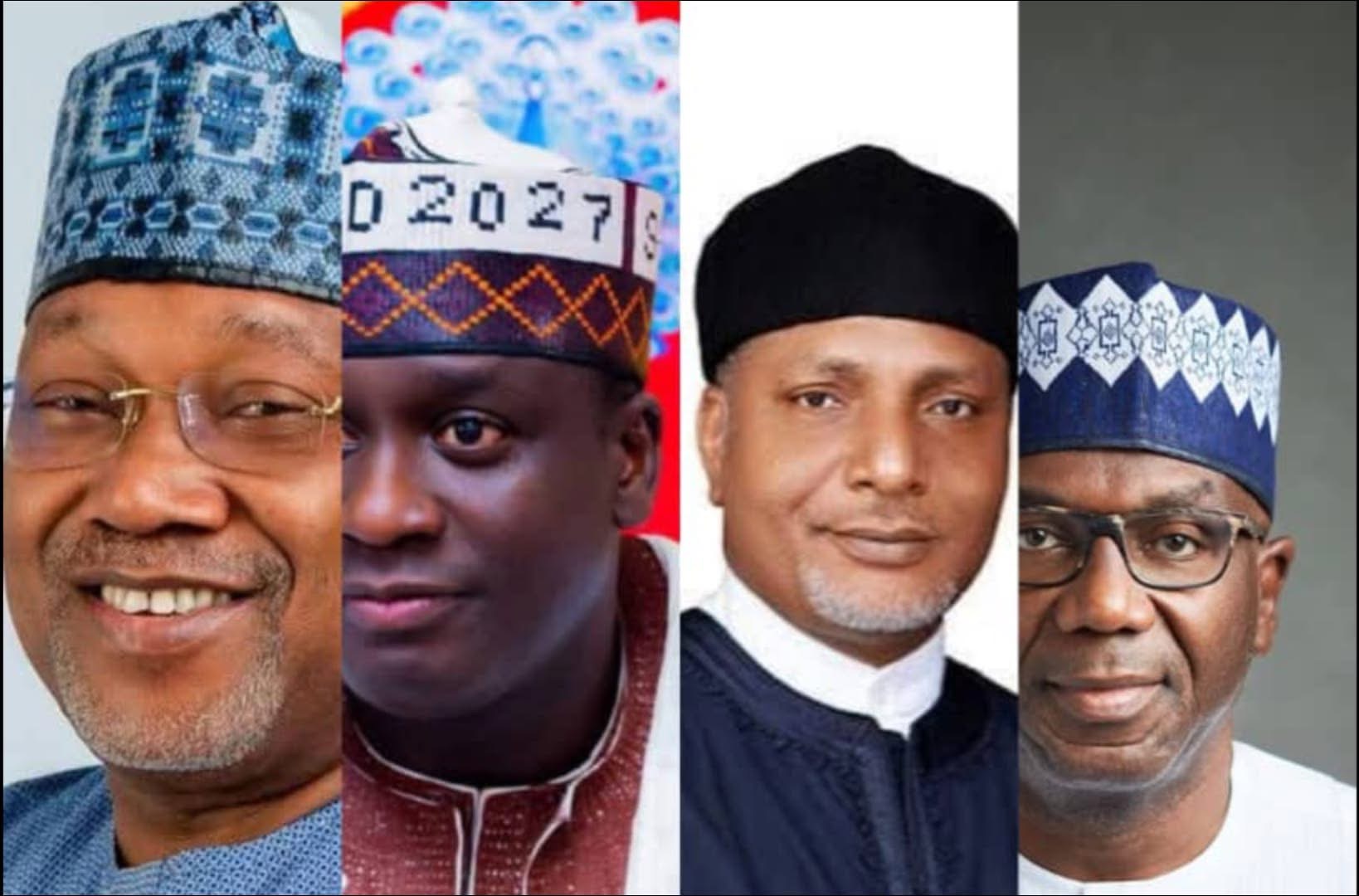
The profiles and antecedents of the major gubernatorial contenders will inevitably come under intense scrutiny too. The PDP candidate, Engr. Bolakale Kawu, brings to the contest a career shaped by public service and humanitarian engagement. His record as a civil servant and his interventions in the lives of ordinary people provide a platform upon which his campaign can construct a narrative of service, compassion and competence.
His principal challenger, Engr. Yakubu Danladi, will similarly be judged against his long political career, particularly his years as Speaker of the Kwara State House of Assembly. The electorate will inevitably ask difficult questions: What legislative footprints did his years in the Assembly leave behind? How effectively did he deploy the instruments of representation, oversight and lawmaking? How many developmental projects did he influence for his constituency? What percentage of his legislative responsibilities can be translated into measurable impact? These are not merely campaign questions. They are questions of political accountability.
A politician who has occupied public office for years cannot escape the scrutiny of the electorates. In 2027, antecedents will count records will matter and personal credibility will speak. And, perhaps most importantly, the ability to demonstrate tangible impact will matter. Beyond Party Labels The emerging political equation suggests that 2027 may transcend the conventional APC-versus-PDP binary.
The electorates could be presented with a broader choice between performance and perception, connection and detachment, credibility and political rhetoric, goodwill and disillusionment. Political parties will provide the platforms, but candidates will carry the burdens of their antecedents.
The campaign may therefore become less about what politicians promise and more about what they can point to. For Governor AbdulRazaq, the challenge is to convince Kwarans that his administration remains worthy of their confidence. For the opposition, the burden is equally enormous, it must demonstrate that it is not merely exploiting public frustration but possesses the competence, cohesion and credibility to provide a viable alternative. And therein lies the real battle for 2027.
O toge was not merely a slogan in 2019. It was an expression of accumulated political frustration that eventually became an electoral earthquake. That political earthquake can be replicated, the governor has provided the opportunity. Character matters, it manifests easily.
Undoubtedly, government actions have reincarnated the _O toge_ debacle. Public outrage now trails its admission that a staggering N27.7bn was expended on the mere renovation of Kwara Hotels, against an initial approval of N17.8bn. This defies logic, especially when Crystal Group, a competent construction firm, had proposed N3.5bn for the same project. It is a damning testament to opacity and gross mismanagement of our common patrimony.
Consequently, one thing is becoming increasingly clear, the old political equation is being rewritten. If O toge was the cry of 2019, 2027 may yet witness its political reincarnation. The decimal is recurring. And this time, the arithmetic of power may be far more complicated than we all can imagine.
Abdullateef Ishowo
Director, Media and Strategic Communication to Senator Saliu Mustapha