
News
Atiku’s Fuel Subsidy Plan Is Political Strategy, Not Economic Policy – Fayemi

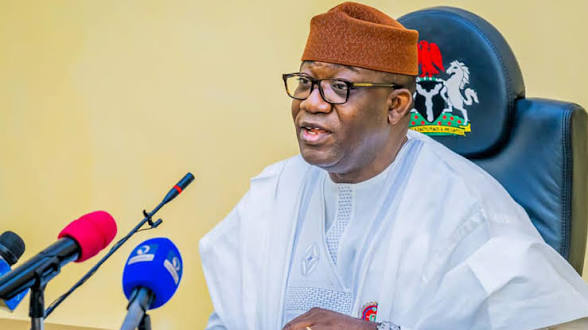
Former Ekiti State Governor, Kayode Fayemi, has described former Vice-President Atiku Abubakar’s proposal to restore petrol subsidy if elected president in 2027 as a political strategy aimed at winning public support.
Fayemi made the remarks during an interview on Arise TV on Monday, where he compared Atiku’s subsidy proposal to the Muslim-Muslim presidential ticket adopted by the All Progressives Congress (APC) in the 2023 election.
“My take is that Atiku’s proposal on subsidy is the political equivalent of our own Muslim-Muslim ticket in 2023. It’s a political strategy. It’s not an economic construct,” Fayemi said.
Atiku, who is seeking the presidency in 2027, recently said he would restore petrol subsidy if elected, arguing that the policy could provide relief to Nigerians struggling with the rising cost of living.
He also questioned how funds saved from the removal of the subsidy had been utilised, saying such resources should have been channelled towards poverty reduction and national development.
President Bola Ahmed Tinubu has criticised the proposal, describing it as evidence of what he called “serious ignorance” of governance and the economy.
Atiku, however, clarified that his proposal would not amount to a return to the previous subsidy regime, but would involve a targeted, capped, budgeted and independently audited intervention designed to support domestic production.
Fayemi acknowledged that the proposal could resonate with Nigerians affected by the economic hardship resulting from the removal of the subsidy.
“But understandably, it is a political strategy that will sell with those who are hard done by the impact of fuel subsidy removal,” he said.
The former governor maintained his support for the removal of petrol subsidy, saying he had advocated the policy for years.
However, he faulted the manner in which the policy was implemented under the Tinubu administration, particularly the failure to put adequate measures in place to protect vulnerable Nigerians.
According to Fayemi, the Nigerian Governors’ Forum had previously worked with the federal government and the World Bank to develop a safety-net programme for Nigerians expected to be affected by subsidy removal.
“What President Tinubu inherited, in fairness to him, was the work that had already been completed by that [Buhari] administration. The only challenge it had was the way it was done,” he said.
Fayemi said many poor Nigerians were less concerned about the technical debate surrounding subsidy removal and were more focused on meeting their basic needs, including food, education and healthcare.
He argued that Atiku was seeking to capitalise on those concerns, just as the APC’s Muslim-Muslim ticket was viewed as a strategy to maximise electoral support in 2023.
“So I think the way we saw Muslim-Muslim ticket as a political strategy in order to maximise the vote for our party in 2023, I believe that’s what the opposition candidate is also trying to take advantage of,” Fayemi said.